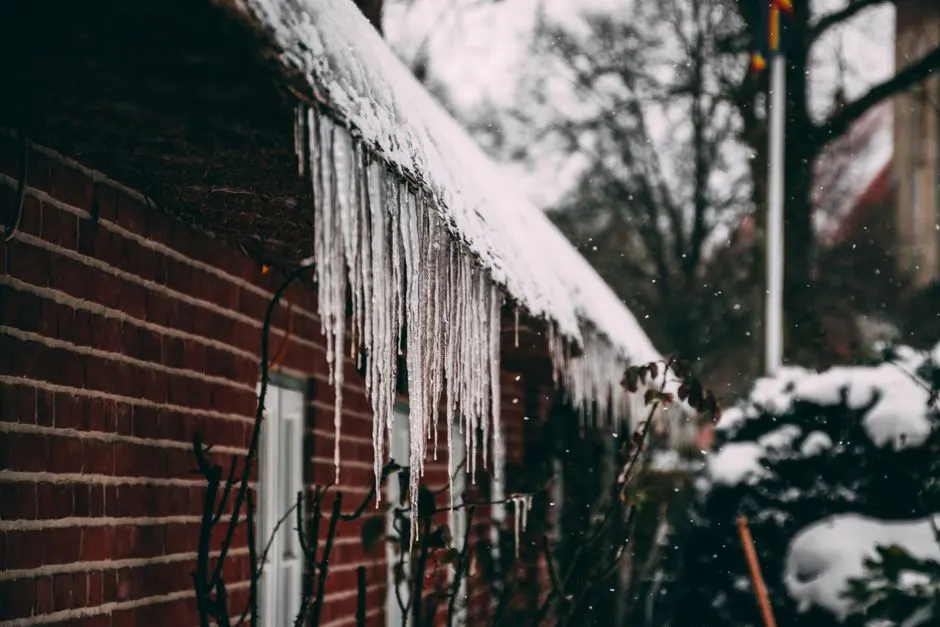
Preparing your Boise home for winter pipe bursts means insulating every exposed pipe, sealing crawl space vents, and letting faucets drip on the coldest nights - because Boise's high-desert winters routinely drop below 20°F and pipes in unheated spaces freeze solid within hours. If you do nothing else, drip the faucets and open cabinet doors under sinks on nights forecast below 20°F. The rest of this post walks through the full winterization routine, what it costs in 2026, and what to do when a pipe bursts anyway.
Why Boise pipes burst so often
Boise pipes burst so often because our winters swing hard between 40°F afternoons and single-digit nights, and that freeze-thaw cycle stresses the same pipe joints over and over. Water expands about 9% when it turns to ice. That expansion has to go somewhere, and it usually finds the weakest point: a soldered elbow, a shark-bite fitting, or a hairline crack in copper that's been in the wall since the 1970s.
Most of the homes we work in across the North End and Boise Bench were built between 1940 and 1980, back when insulation standards were a suggestion rather than a code. Those houses have pipes running through exterior walls, unheated crawl spaces, and garages that never see a heat register. When the temperature drops to 15°F for six hours straight, those pipes are the first to go.
We also see a spike in calls every January when homeowners leave for a long weekend in McCall or Sun Valley and turn the thermostat down to 55°F. That's fine for the living room. It's not fine for the pipe running along the north wall of the garage. A burst pipe can dump 250 to 500 gallons of water into your home before anyone notices, and by then the drywall, flooring, and baseboards are already soaked.
If you've already had a freeze event this season, our team handles Burst Pipe Water Damage Boise ID around the clock - we extract the water, dry the structure, and repair the pipe so you're not dealing with mold three weeks later.
At what temperature do pipes freeze in Boise Idaho?
Pipes freeze in Boise Idaho at 32°F, but the real danger starts at 20°F and below, when exposed pipes in crawl spaces, garages, and exterior walls can freeze solid in as little as 4 to 6 hours. The wind chill matters too. A 15°F night with 20 mph wind pulls heat out of a pipe far faster than a still 15°F night.
Here's the practical breakdown for Boise homeowners:
- 32°F: Water in an exposed pipe starts forming ice crystals. Not an emergency yet.
- 20°F: Pipes in unheated crawl spaces and garages begin to freeze. This is when you drip faucets.
- 10°F and below: Pipes inside exterior walls - even insulated ones - are at risk. Boise hits this range most January and February nights.
- 0°F: Any pipe with inadequate insulation is likely to freeze. We see the most burst-pipe calls after these nights.
Boise's average January low is 24°F, but we regularly get cold snaps that push into single digits. The record low for the city is -25°F, set back in 1957, and while we're not hitting that every year, a 5°F night is enough to crack a pipe that's been slowly weakening for a decade.
How to prepare your Boise home for winter pipe bursts
Preparing your Boise home for winter pipe bursts is a weekend project you can knock out before the first hard freeze, usually in late October or early November. Here's the routine we walk homeowners through every fall.
1. Insulate every exposed pipe
Foam pipe sleeves cost about $1 to $2 per linear foot at any Boise hardware store. You want them on every pipe in the crawl space, garage, attic, and any exterior wall cabinet. Pay special attention to the 18 inches of pipe closest to where it enters the exterior wall - that's the coldest spot and the most common failure point.
For pipes that run through unheated crawl spaces, foam sleeves alone aren't enough. You need heat tape - the self-regulating kind that plugs in and warms the pipe to about 40°F. A 12-foot heat tape runs $30 to $60 and uses about as much electricity as a light bulb. We install these on every crawl space pipe we touch during a Crawl Space Restoration Boise ID job because it's the cheapest insurance you can buy.
2. Seal crawl space vents and gaps
Boise homes with pier-and-beam foundations have foundation vents that let cold air pour in all winter. Cover them with rigid foam board cut to size, or use the vent covers sold at local hardware stores. You want the crawl space to stay above 40°F. A $20 thermometer you can set on a joist will tell you if you're winning.
While you're down there, seal any gaps around pipe penetrations with expanding foam. Cold air whistling through a half-inch gap will freeze a pipe faster than a wide-open vent because it concentrates the cold on one spot.
3. Disconnect hoses and shut off exterior spigots
Every Boise home has at least one exterior hose bib. Disconnect the hose, drain it, and shut off the interior valve that feeds the spigot. Then open the exterior spigot to let any remaining water drain out. If you don't have an interior shutoff valve, install one - it's a $150 to $250 plumbing job that prevents a $4,000 repair.
4. Drip faucets on cold nights
When the forecast calls for 20°F or below, let the faucets drip. A slow trickle - about the width of a pencil lead - keeps water moving through the pipe and relieves pressure if ice does start to form. Drip the faucet farthest from where the water enters the house, and open the cabinet doors under sinks on exterior walls so warm air can circulate.
Yes, you'll waste some water. A dripping faucet uses about 15 gallons a day. That's roughly $0.10 in Boise. Compare that to the cost of a burst pipe and it's not a close call.
5. Keep the heat on - even when you're gone
Never set your thermostat below 55°F when you leave for a winter trip. If you have a smart thermostat, set it to hold 55°F and disable the eco mode that drops it lower. We've cleaned up too many homes where the owner saved $12 on heating and came back to $18,000 in water damage.
Winter pipe insulation cost in Boise ID
Winter pipe insulation cost in Boise ID runs $1 to $2 per linear foot for DIY foam sleeves, or $300 to $800 for a professional to insulate the exposed pipes in a typical crawl space and garage. Heat tape adds $30 to $60 per run. If you need a plumber to install shutoff valves or reroute a pipe that's buried in an exterior wall, budget $150 to $400 per fixture.
Typical 2026 pricing in the Boise area breaks down like this:
- DIY foam pipe sleeves: $1-$2 per linear foot
- Self-regulating heat tape: $30-$60 per 12-foot run
- Professional crawl space pipe insulation: $300-$800
- Exterior spigot shutoff valve install: $150-$250
- Burst pipe repair (emergency): $500-$1,500 depending on access
- Water damage cleanup after a burst: $2,500-$8,000+
The math is simple. Spend a few hundred dollars in October or spend thousands in January. We've never met a homeowner who regretted insulating their pipes.
What to do if pipes freeze in Boise
If pipes freeze in Boise, the first thing to do is shut off the main water valve and open the nearest faucet. That relieves pressure and gives the melting ice somewhere to go. Then warm the pipe with a hair dryer, heat lamp, or space heater - never a torch or open flame.
Here's the step-by-step:
- Shut off the main water valve. It's usually in the basement, crawl space, or a utility closet near the water heater.
- Open the faucet closest to the frozen pipe. If water trickles out, you're on the right track. If nothing comes out, the blockage is between the faucet and the main.
- Apply gentle heat. A hair dryer on low, a heating pad, or a space heater aimed at the pipe. Start at the faucet end and work backward toward the freeze.
- Watch for leaks. Once the pipe thaws, water will flow. If you see a crack or a puddle, shut the valve off again and call us.
- If you can't find the freeze or the pipe has already burst, shut off the water and call a professional. A burst pipe inside a wall can soak insulation, drywall, and framing in under an hour.
If the pipe has already burst, our team handles Emergency Water Removal Boise ID 24 hours a day. We extract standing water, set drying equipment, and document everything for your insurance claim.
Common mistakes to avoid
The most common mistake we see is homeowners insulating the pipe but forgetting the fittings. Foam sleeves slide right over elbows and T-joints, but most people cut them short and leave the fitting exposed. That's where the pipe bursts.
Other mistakes that cost Boise homeowners thousands every winter:
- Leaving the garage door open during a cold snap. A pipe running along the garage wall will freeze in 3 to 4 hours.
- Using a space heater unattended. We've responded to more house fires from this than burst pipes. If you use a heater to thaw a pipe, stay in the room.
- Turning the heat off completely when you leave. Set it to 55°F and leave it.
- Assuming new construction is safe. We see frozen pipes in brand-new homes in Harris Ranch and Meridian every year because the builder ran a line through an unconditioned attic.
- Ignoring a slow drain. If a drain is draining slower than usual in winter, it may already have ice forming in the trap.
If you're in one of the newer developments and want a second opinion on your winterization, we work in Disaster Cleanup in Harris Ranch and the surrounding areas regularly. We'll tell you what we'd do if it were our house.
When to call a professional
Call a professional when you can't find the frozen section, when the pipe has already burst, or when water is pooling anywhere you can't see the source. If you've shut off the main valve and water is still dripping from a ceiling or wall, you've got a burst pipe behind the drywall - that's not a hair-dryer job.
We also get calls from homeowners who want us to winterize their pipes before they leave for the winter. That's a smart move. We'll insulate the exposed runs, install heat tape where it's needed, and check the crawl space for gaps you might have missed. It's a few hundred dollars and it means you can leave town without worrying about coming home to a flooded house.
If you're dealing with water damage right now, don't wait. Mold starts growing in 24 to 48 hours. Our team at Rapid Disaster Cleanup Boise id handles everything from extraction to reconstruction, and we work directly with your insurance company so you're not stuck in the middle.
Frequently Asked Questions
How do I prevent pipes from bursting in Boise winter?
Insulate every exposed pipe with foam sleeves, seal crawl space vents, disconnect exterior hoses, and drip faucets when the forecast drops below 20°F. Keep your thermostat at 55°F or higher even when you're away. These five steps prevent the vast majority of winter pipe bursts in Boise.
At what temperature do pipes freeze in Boise Idaho?
Pipes freeze at 32°F, but the real risk starts at 20°F and below. Boise hits that range most nights in January and February. Exposed pipes in crawl spaces and garages can freeze solid in 4 to 6 hours at those temperatures, especially with wind.
Should I drip faucets to prevent frozen pipes in Boise?
Yes. Drip the faucet farthest from where water enters the house whenever the forecast is 20°F or lower. A pencil-lead trickle keeps water moving and relieves pressure. It costs about $0.10 a day in Boise - far less than a burst pipe repair.
Who do I call for burst pipe repair in Boise?
Call a licensed plumber for the pipe itself and a water damage restoration company for the cleanup. Rapid Disaster Cleanup Boise id handles both - we extract the water, dry the structure, and coordinate the pipe repair so you're not juggling two contractors. Call 208 848-5209.
How much does it cost to winterize pipes in Boise?
DIY winterization runs $50 to $150 in materials. Professional crawl space insulation and heat tape installation costs $300 to $800 for a typical Boise home. Exterior spigot shutoff valves add $150 to $250 each. It's a fraction of the $2,500 to $8,000 a burst pipe cleanup costs.
Get help with Disaster Cleanup in Boise
If a pipe has already burst or you're seeing water where it shouldn't be, call us now. We handle Disaster Cleanup Boise ID around the clock - extraction, drying, repairs, and insurance paperwork.
Call Rapid Disaster Cleanup Boise id at 208 848-5209. We'll be there fast, and we'll tell you exactly what it's going to take to get your home dry and safe again.